
Garrett County Arrest Warrants Explained
An arrest warrant tells a peace officer to arrest a named person. A judicial officer signs one only after reviewing a charging document and finding probable cause, the standard set by Maryland Criminal Procedure Article § 2-202. Garrett County gets its warrants from two benches. A District Court commissioner can issue one from a statement of charges. A Circuit Court judge can order one after an indictment or an information backed by probable cause. In practice, the court that will hear the case is the court that issues the warrant. Keep the neighbors separate, too. A body attachment, a civil summons, and a search warrant each run through their own courts and their own rules.
Probable Cause Behind a Garrett Arrest Warrant
Every Garrett County arrest warrant rests on probable cause. That is the legal floor. It asks whether the facts in the charging document would convince a reasonable person that a crime occurred and that the named person committed it. An officer's report or a statement of charges usually supplies those facts. A judge or commissioner reads them first. Nothing gets signed until that review is done. Maryland's court rules, especially Title 4, govern what happens next, from charging through initial appearance and release. The paperwork also fixes which court will hold the file.
- Charging document
- The paper that starts a criminal case, such as a statement of charges or an indictment.
- Probable cause
- The factual threshold a judicial officer applies before issuing a warrant.
- Initial appearance
- The first hearing after arrest, where charges and release conditions are addressed.
Inside a Garrett County Arrest Warrant
The arrest warrant itself is brief. The case file behind it is not. Garrett County court rules set the working structure, and the sheriff's public display shows only its own card fields rather than the full court record.
| Warrant or process number | Assigned by the court. No standard Garrett County public format is published. |
|---|---|
| Case number | A District or Circuit case number, sometimes a 12-digit tracking number such as 120250012345. |
| Person named | The name on the charging document, with identifiers the officer can confirm. |
| Charge | The offense, and whether it is a misdemeanor, a traffic matter, a local ordinance, or a felony. |
| Issuing authority | The judge or commissioner who signed it, and the court that holds the case. |
| Bond or release status | Set by a commissioner or judge after arrest, not printed on the warrant itself. |
Note: A public warrant card shows a name, an age, a type, and a reason label, not the case number or court.
Unserved Garrett County Arrest Warrants
An unserved Garrett County arrest warrant stays confidential in most cases. Maryland General Provisions § 4-316 shields unserved warrant and charging records until service, return, or a set time condition, subject to limited exceptions. So a caller may hear that no record exists when one does. A request can also be refused for reasons that have nothing to do with the person asking. Service or return is what opens the record up.
Key Rules:
General Provisions § 4-316 - unserved arrest warrant and charging records stay confidential until service or return, with exceptions.
Courts and Judicial Proceedings § 3-8A-27 - juvenile police and court records are confidential, with narrow exceptions.
Serving Arrest Warrants in Garrett County
The Garrett County Sheriff's Office handles court process for both the District and Circuit Courts. Its service list is broad. Arrest warrants, bench warrants, body attachments, criminal summonses, protective and peace orders, subpoenas, levies, and evictions all pass through deputies. Those deputies hold the same arrest powers as other peace officers, and they may execute an arrest warrant anywhere in Maryland. That reach matters in a county stretching across more than 650 square miles. A deputy's job ends with delivering the person to the court process. Only the issuing court can change the order or its terms. The sheriff's process service page lists every category the office takes on.
The Garrett County Commissioner After Arrest
After an arrest in Garrett County, the person goes before a District Court commissioner. The commissioner wears several hats at that first appearance. He or she weighs whether probable cause supports the charge, explains the charge and its possible penalties, covers the right to counsel and the public defender option, and considers bail. The local station sits at 239 East Alder Street in Oakland. Published coverage runs weekdays from 8 a.m. to midnight, with on-call coverage overnight and 48-hour weekend coverage. If no commissioner is on station, the office asks callers to phone in for instructions. Release questions go to the commissioner's office. The clerk is the one to ask about the case file itself.
Comparing Arrest, Summons, and Bench Warrants
Maryland has three main tools for bringing a person before a court. A summons, an arrest warrant, and a bench warrant do not carry the same weight at the outset, and Garrett County readers should know which is which.
| Process | How it starts | What happens first |
|---|---|---|
| Arrest warrant | A charging document and a probable-cause finding | Custody, then a commissioner appearance |
| Criminal summons | A charging document with a court date | An appearance on the scheduled date |
| Bench warrant | A missed date or a broken court condition | Custody on the existing case |
A summons is only a notice to appear. The other two let an officer take someone into custody. The third column gets its own treatment on the Garrett County bench warrant page.
Detention and Bond After a Garrett Arrest
Garrett County's detention center shares an address with the sheriff's office at 311 East Alder Street. The facility reports seven housing units, 72 general-population beds, and four holding cells. People may be held there on bond or without bond. Bail is set case by case. The published categories include cash, property, intangible property, credit or debit card, and a professional bail bondsperson. A cash bond can come back after the required appearances, but a bondsman's fee is not refundable. The detention center page publishes those facility facts along with no booking roster, bond window, or cashier schedule.
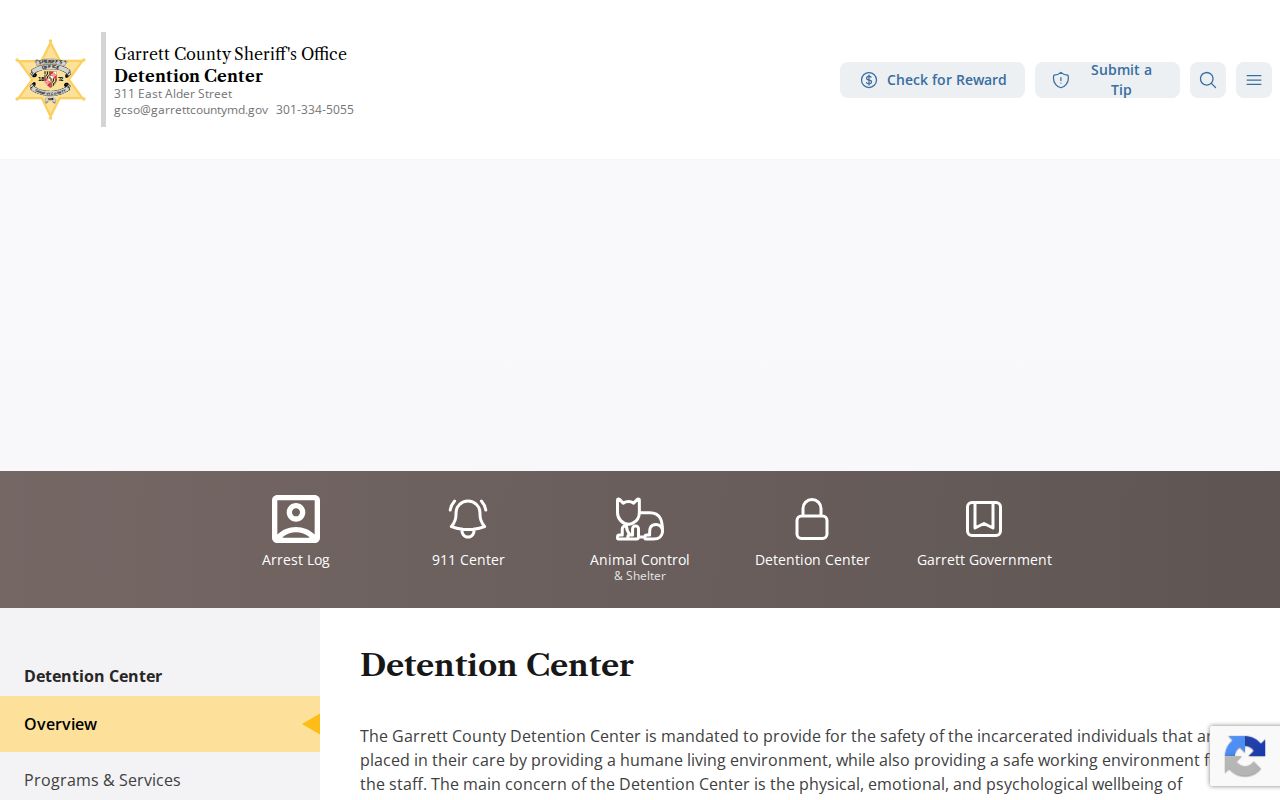
Treat any Garrett County detention capacity figures as general context only, since they say nothing about one person's custody status.
If There's an Arrest Warrant for You
A Garrett County arrest warrant never expires just because no one has acted on it. It stays active. It can resurface at a traffic stop, in a government background check, or at a court hearing on an unrelated matter.
- Confirm the charge and the issuing court. Ask for the case number and the bond terms.
- Speak with a Maryland attorney, or the public defender line, before deciding how to appear.
- Ask the court what it requires: a scheduled appearance, a surrender, a bond, or a motion.
- Follow that route and keep every receipt, order, and confirmation number.
- Check the docket afterward to see what the court recorded, and ask how the process is marked satisfied.
Important: An active arrest warrant can lead to custody at any police contact. Talk to a lawyer before turning yourself in.
Federal Arrest Warrants Are a Separate System
Maryland's state system and the federal system stay separate. A federal arrest warrant never shows up in the state case index, and a Garrett County warrant never appears on a federal docket. Federal process for this district is issued and held by the U.S. District Court for the District of Maryland. The U.S. Marshals Service does the federal fugitive work in the district. To read federal records, use PACER, the official access service. Charges run ten cents a page, capped at three dollars a document. Quarterly bills of thirty dollars or less get a fee waiver, and courthouse terminals are free. One more limit: a sealed federal warrant will not appear at all.
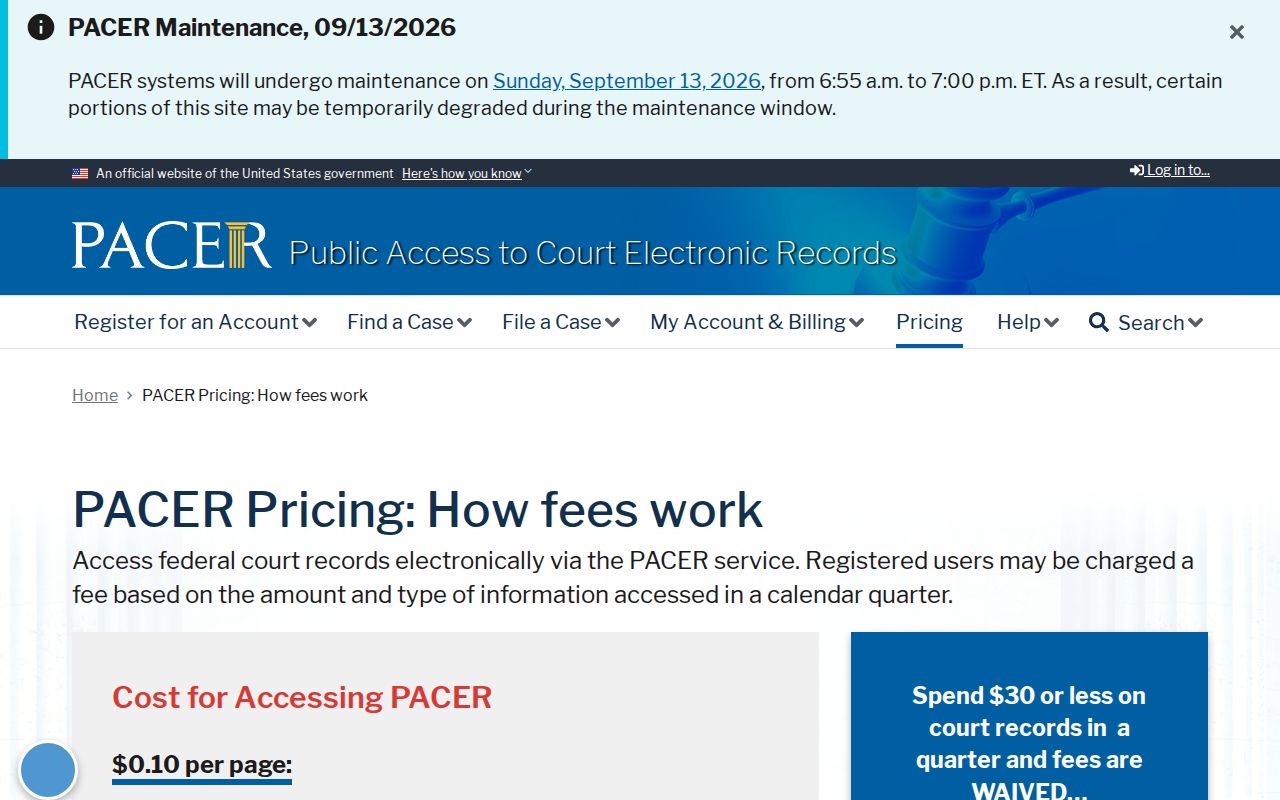
The registration page above is the gateway to federal dockets, not a warrant list. Only the issuing federal court can confirm or withdraw a federal warrant, so a Garrett County resident with a federal question goes there.
Police Roles in Garrett County Warrant Service
Several agencies can make an arrest inside Garrett County. Each one answers a different question about warrant service.
- The sheriff serves District and Circuit process countywide and takes routing questions at 301-334-1911.
- Oakland Police handle city matters at 301-334-2100, with after-hours calls routed to the sheriff.
- Maryland State Police Barracks W covers state roads and highways in the county.
- The U.S. Marshals Service handles federal fugitive matters out of the District of Maryland.
None of those agencies can recall a state warrant. Only the issuing judge can. For the county-wide channels, the case index and the records route are laid out on the Garrett County warrant records home page.