
Garrett County Bench Warrants Explained
A Garrett County bench warrant is the court's own order, and no new criminal charge is filed to get one. A judge issues it when a person expected in court does not show up, when a release condition or probation term is broken, or when an order sits unpaid long enough to force a response. That is what separates it from the warrant most people picture. The Maryland court glossary keeps the two terms distinct, and the sheriff's display labels selected cards as either Bench Warrant or Arrest Warrant. The label alone will not tell you which judge signed it or what the bond is. Those answers live in the case file itself.
Note: A bench warrant label describes how the process started, not how urgent it is or what a court will do next.
Garrett County Missed Court Dates and Warrants
Most Garrett County bench warrants trace back to a missed date. For a payable citation, Maryland gives a person 30 days to pay in full, ask for a waiver hearing, ask for a trial, or apply for an eligible payment plan. Ignore all four, and the court may issue a bench warrant, a step the traffic-citation statute covers at Maryland Criminal Procedure § 5-212.
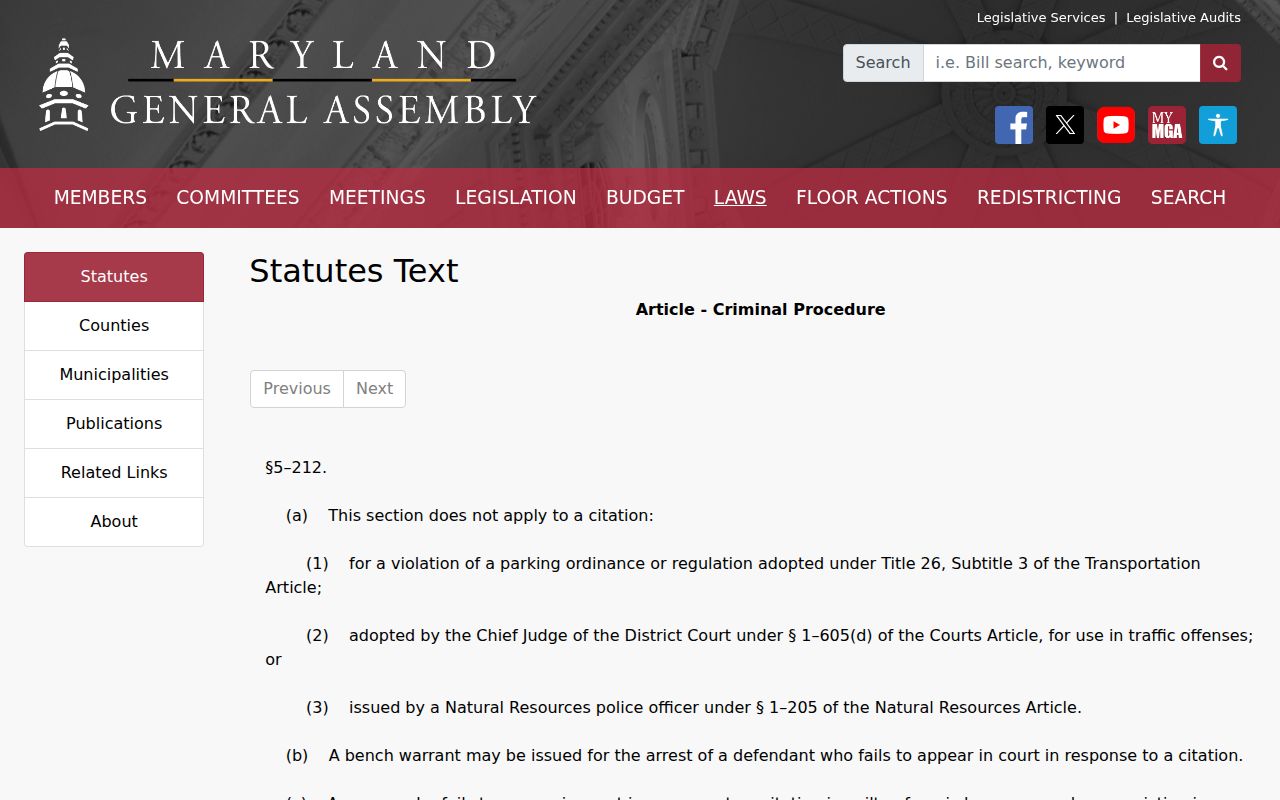
Read that statute as a description of the process, not a statement about any one case. The docket entry, not the statute, tells a person where a particular matter stands. The Garrett County District Court handles traffic, misdemeanor, and local ordinance cases here. A missed date there is not the same as a missed felony date, and the phone call is different too.
How Garrett County Bench Warrants Are Issued
Issuance happens inside the courthouse, not at a police counter. When someone fails to appear, the judge on the case can order the warrant on the spot. A defendant released on bail who willfully fails to surrender faces the same process. In Garrett County, that decision belongs to the District Court for traffic and misdemeanor matters and to the Circuit Court for circuit-level cases. After an arrest, the Garrett County commissioner station handles bail work, so it takes calls about release terms while the clerk takes calls about the file.
Bail Forfeiture Behind a Garrett Bench Warrant
Bail is a promise backed by money or property. Break the promise, and the court can forfeit it and order an arrest. Maryland Criminal Procedure Article § 5-211 sets out how that works after a willful failure to surrender. The bench warrant stays tied to the original case, so the bond terms and the issuing court do not start over. A bondsman's fee is not refundable, and a cash bond can be returned or forfeited.
Key Rules:
Criminal Procedure § 5-211 - governs the bench warrant that follows a willful failure to surrender after release on bail or recognizance.
Criminal Procedure § 5-212 - governs failure to appear on a traffic citation and the bench warrant that may follow.
The statute text spells out that forfeiture rule in full.
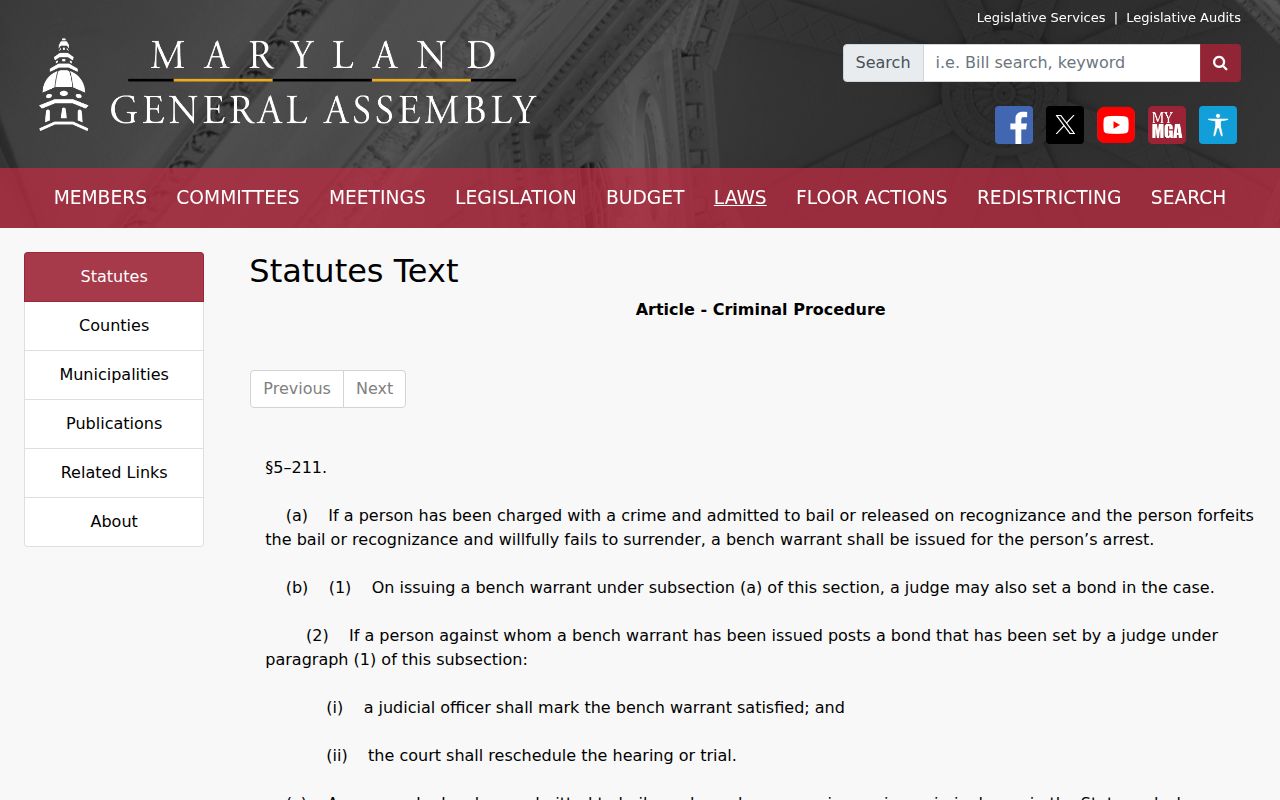
It answers what happens to posted bail after a willful failure to surrender.
Bench Warrants and Arrest Warrants Compared
The two Garrett County labels describe different beginnings, and each changes who a person calls first. An arrest warrant follows a charge and a probable-cause finding. A bench warrant follows what someone did, or failed to do, after a case already existed.
| Point | Bench warrant | Arrest warrant |
|---|---|---|
| Starting event | A missed date, a broken condition, or a forfeited bond | A charging document and a probable-cause finding |
| Who orders it | The judge already handling the case | A judge or a District Court commissioner |
| Where the file lives | District or Circuit Court, depending on the case | The court that will hear the charge |
| First call | The clerk handling the case file | The charging court and, after arrest, the commissioner |
Both can end in the same place. A peace officer may arrest on either one, and both stay outstanding until a Garrett County court closes them out.
Calling About a Garrett Bench Warrant
Four counters handle bench-warrant questions in Garrett County, and each covers a different piece.
District Court, District 12
205 South Third Street, Oakland
301-334-8020
Traffic, misdemeanor, and ordinance cases
Commissioner Station
239 East Alder Street, Oakland
301-334-8030
Charging, bail, and after-hours coverage
Clerk of the Circuit Court
203 South Fourth Street, Room 109
301-334-1937
Circuit criminal files and records requests
Garrett County Sheriff
311 East Alder Street, Oakland
301-334-1911
Service and agency routing
Read the Garrett County commissioner station page before an after-hours call. It publishes weekday hours from 8 a.m. to midnight, on-call coverage overnight, and weekend coverage.
Resolving a Garrett County Bench Warrant
Garrett County publishes no walk-in surrender window and no local recall form. The court that issued the warrant controls what happens next. So make a call, not a drive.
- Identify the court and the case number. Ask whether the file is a District Court matter or a circuit matter.
- Call that court and ask what it requires: an appearance, a new date, a payment, or a bond.
- Talk with a Maryland attorney or the public defender line before choosing how to appear.
- Follow the route the court sets out. Do not assume a payment alone closes a failure-to-appear process.
- Keep the receipts, then check the docket again to confirm what the court recorded.
Caution: A bench warrant can lead to arrest during any police contact. Ask the court about the right way to appear rather than showing up unannounced.
Recall and Quash for Garrett Bench Warrants
People use several words for the same idea in Garrett County, and the words matter when a clerk asks what you want.
- Bench warrant
- A court order for a missed appearance, a broken condition, or an unpaid obligation.
- Recall
- A court action that withdraws an outstanding process. The issuing court decides.
- Quash
- A request to set a process aside. Maryland pages use both words for the same family of relief.
- Body attachment
- A civil or family process directing an officer to bring a person before the court.
- Capias
- A Maryland writ or process. Garrett public pages say bench warrant far more often.
Garrett County publishes no county-specific recall form. No fee for one is listed either.
Finding the Court That Issued the Warrant
Start with the reason you think a warrant exists. A citation or a missed misdemeanor date points to the Garrett County District Court in Oakland. A felony case or an indictment points to the Circuit Clerk. The state case index can confirm which court and which case number, using a full name or a known case number. It carries selected docket information rather than a complete file, so a missing entry is not a clearance. If the index does not settle it, the Garrett County clerk can. Ask which court issued the warrant and how that court records satisfaction.
Note: Two courts can hold records about one person at the same time, so confirm each case number separately.
Paying a Ticket Does Not Recall It
This mistake costs people the most time in Garrett County. A citation payment clears the money owed, but it does not automatically withdraw a bench warrant that already issued on the same case.
- A payment plan addresses an eligible outstanding balance of at least $150. It is a traffic remedy, not a bond.
- A dishonored check carries its own fee, which the traffic option form sets at $30.
- A license suspension from the MVA is a separate administrative action from the court process.
- A case dropped from the public index is not the same as a case resolved in court.
Before you count that traffic ticket as done, ask the Garrett County District Court how it handles the failure-to-appear entry. The state traffic instructions list the response choices that come first.
Body Attachments Are Not Bench Warrants
Sheriff's deputies in Garrett County deliver more than arrest paperwork. Body attachments, criminal summonses, protective orders, subpoenas, levies, garnishments, and evictions all sit on the office's process list. Each carries its own rules. Most of these come from civil or family files, not criminal cases. Confidentiality limits differ too. Mixing them up sends you to the wrong counter, so ask the court that issued the paper first. County-wide warrant search channels are laid out on the Garrett County warrant records home page.